
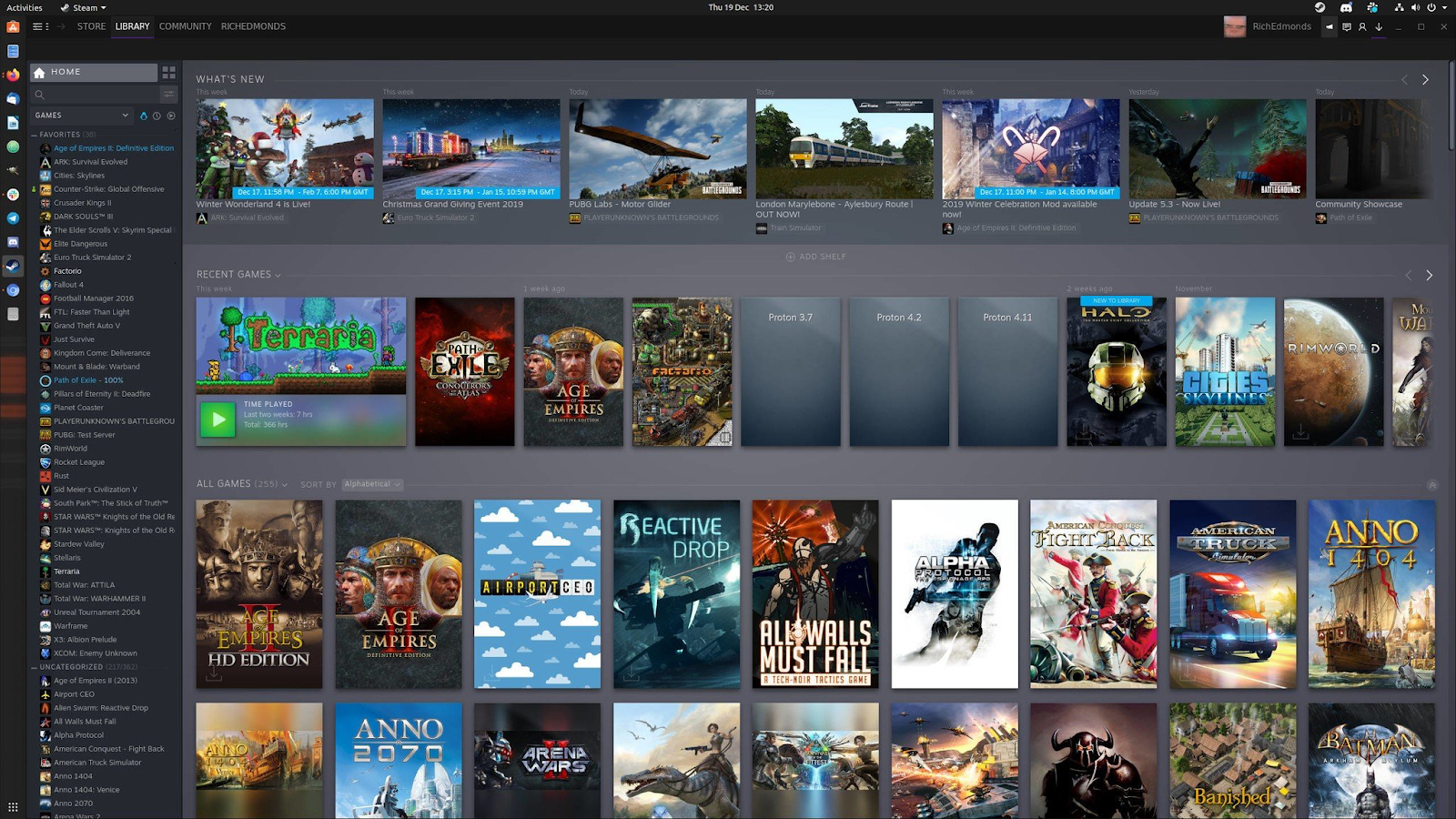
 For Linux users and anyone working across multiple systems, that shift matters more than ever. Instead of managing drivers, GPUs, and storage constraints, the experience is delivered through a browser or lightweight client, with the heavy lifting handled remotely.
Efficiency, flexibility, and infrastructure matter. Cloud gaming sits at the intersection of all three, combining distributed computing with real-time media delivery. Choosing the right platform comes down to how well it performs under real conditions, not just on paper.
GeForce Now – The most polished option for broad compatibility
GeForce Now remains one of the most refined cloud gaming platforms available. Its strength lies in delivering a consistent, well-optimized experience across a wide range of devices, including systems where native gaming support is limited. For Linux users in particular, its browser-based accessibility and minimal setup requirements make it one of the more practical options in day-to-day use.
Where it stands out is in stability and maturity. The platform has gone through multiple iterations of optimization, and that shows in how predictable sessions feel. Performance tuning is well-calibrated, visual quality remains consistent, and the service handles varying network conditions without requiring constant adjustments from the user. This level of refinement is often more noticeable over time than raw performance claims.
Where it works best
GeForce Now performs reliably across Europe and North America, where infrastructure density supports low-latency connections and stable throughput. In these regions, the service feels responsive enough for a wide range of genres, including those that are more sensitive to input delay. Its adaptability across different devices also makes it suitable for users who move between desktop, laptop, and TV environments.
Why its streaming approach matters
The platform focuses on delivering high visual fidelity with consistent bitrate management. While it continues to evolve in terms of codec support, its strength lies in how well it balances image quality and responsiveness under real-world conditions. This makes it a dependable choice for users who want a stable experience without needing to fine-tune settings.
Who should choose it
GeForce Now is best suited for users who prioritize reliability, polished delivery, and a service that works across multiple environments without friction. It fits well into workflows where gaming is just one of many activities, rather than the only focus.
Xbox Cloud Gaming – The easiest path for ecosystem-driven players
Xbox Cloud Gaming is built around accessibility and ease of use. It offers one of the most straightforward entry points into cloud gaming, with an experience designed to minimize setup and reduce technical barriers. For many users, this simplicity is its defining advantage.
The platform integrates tightly with Microsoft’s broader ecosystem, which shapes both its strengths and its limitations. The interface is familiar, navigation is intuitive, and sessions can be started quickly across a variety of devices. This approach favors convenience and speed, making it particularly appealing for casual or time-constrained players.
Where it works best
Xbox Cloud Gaming performs most consistently in North America and Europe, where Microsoft’s infrastructure footprint is strongest. In these regions, users can expect relatively stable sessions and acceptable latency for most types of games. The service is also designed to function across browsers and mobile devices, which expands its accessibility beyond traditional setups.
Why simplicity is its core advantage
The platform removes much of the complexity typically associated with cloud gaming. There is little need to think about configuration, optimization, or system requirements. This makes it easier to start playing quickly, especially for users who are less interested in the technical side of the experience.
At the same time, this streamlined approach means fewer options for customization or performance tuning. The experience is designed to be uniform, which can be beneficial for consistency but limits flexibility for more advanced users.
What kind of experience to expect
Xbox Cloud Gaming delivers a balanced experience that prioritizes accessibility over fine control. Visual quality and responsiveness are generally solid, particularly under stable network conditions, though the platform is less focused on pushing technical boundaries compared to more infrastructure-driven competitors.
Who should choose it
This service is well suited for users who want immediate access, minimal setup, and a familiar environment. It works best for those who value convenience and integration, and who prefer a platform that emphasizes ease of use over technical depth.
Boosteroid – The independent platform scaling like a giant
Boosteroid represents a different approach within the same category. It is a large independent cloud gaming platform operating outside any major tech conglomerate, yet competing with them on both reach and performance.
The platform has grown to support more than 8 million users, with a network of 29 data centers and a library exceeding 1700 titles. This scale is supported by a broader focus on infrastructure. Boosteroid operates as a global technology and infrastructure company building distributed GPU platforms for AI, high-performance computing, and real-time edge workloads.
The platform supports AV1 streaming, which improves visual quality while reducing bandwidth requirements. This is particularly relevant for users on constrained networks or those aiming for higher resolutions without increasing data usage significantly.
Boosteroid’s infrastructure extends beyond gaming workloads. Its GPU platforms are designed for broader compute applications, which positions it within a larger shift toward distributed, high-performance systems. The company received $125.3 million in revenue in 2025, reflecting both growth and increasing demand for this type of infrastructure.
Why geography matters
Boosteroid’s presence across Europe, North America, and South America plays a direct role in performance. Cloud gaming depends heavily on proximity to compute resources, and a wider distribution reduces latency for a larger share of users. Its expansion into South America, alongside established European and North American coverage, reflects a focus on real-world accessibility rather than limited regional optimization.
Who should choose it
Boosteroid is a strong fit for users who care about where and how their games are actually being delivered. It suits players who value broad geographic coverage across Europe, North America, and South America, and who want performance that reflects proximity to real infrastructure rather than ideal conditions.
A closer look at regional performance – Europe, North America, and South America
Performance in cloud gaming is rarely uniform. It varies depending on where the user is located and how well the platform’s infrastructure is distributed.
Europe
All three services perform strongly in Europe, where data center density is high and network infrastructure is mature. Users can expect relatively low latency and stable connections.
North America
North America offers similarly strong conditions, with broad coverage and consistent performance across major urban areas. Infrastructure investment remains a key differentiator at scale.
South America
South America continues to evolve as a cloud gaming region. Platforms with a physical presence, including Boosteroid, are better positioned to deliver stable performance compared to services relying on distant infrastructure.
Which type of player each service suits best
Choosing between these platforms depends less on raw specifications and more on how you intend to use them.
- GeForce Now is ideal for users who want a polished, reliable experience that adapts easily across devices
- Xbox Cloud Gaming fits players who prioritize simplicity and quick access without technical overhead
- Boosteroid appeals to users who value infrastructure scale, geographic reach, and a platform that extends beyond gaming
Why the future of gaming looks more like infrastructure
Cloud gaming is increasingly shaped by the same forces driving modern computing: distributed systems, efficient codecs, and global data center networks. The experience users see on screen is only a small part of what determines performance.
For Linux users and technically minded audiences, this makes the category more relevant than it first appears. The most interesting platforms are those investing in infrastructure, optimizing delivery, and expanding their reach across regions.
As these systems continue to evolve, cloud gaming becomes less about replacing local hardware and more about accessing a global layer of compute designed for real-time interaction.