


Firefox 16, a treat for developers http://t.co/cnd27CzT
Mobile Malware Increases Chances of Infection in Android
Mobile malware is rising, and there have been explosions in the world of viruses and Trojans. Virus makers are now targeting mobile platforms- thanks to their growing popularity. If we take the statistics from last 6 months, the chances of Android smart phones to be infected have doubled.
Lookout Security, the company that develops security solutions for Android phones, reported that the probability of Android phones catching a virus (or any other malware) has risen by 2 ½ times since January 2011.
About 1%-5% Android users have had infected phones by June, and these are just the reported numbers. The actual cases are much more, where users don’t know that their phones are infected with malware.
Kevin Mahaffey, the CTO and co-founder of San Francisco branch of Lookout, disclosed some startling statistics: there were 80 different types of Android malware in January 2011, and the numbers rose to 400 in June. The numbers have risen again in July and August, but the stats have not yet been disclosed. This is a threatening situation for Android users, who are quickly switching to newer and better security mechanisms to keep their phones and tablets safe from the rising risk of virus problems.
These stats have been received by Mobile Threat Network, after analyzing the applications that were acquired from independent and official markets, along with the malware detection outcome from security software. Many apps were not secure, making the phone vulnerable to virus attacks.
The infamous Android malware trouble rose to public eyes this March, when Google pulled over 50 applications from the Android market. These apps were infected with DroidDream, a strong malware. The company continued pulling apps from the market in small clusters from Google’s official website for downloading, along with some third party markets, especially in China.
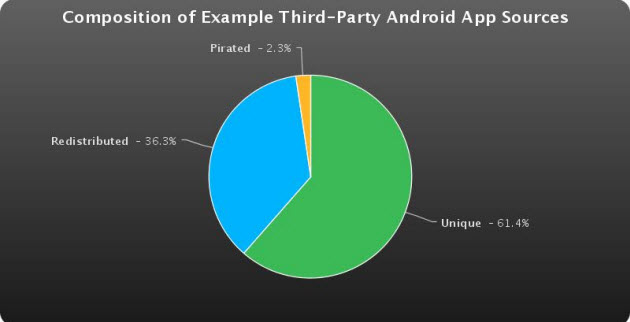
The biggest malware threat to Android users is probably the rogue application model. In this model, attackers pirate a legit program and add some malicious code to it. Then they release it into the market. This repackaging of legit apps poses a lot of danger, and has proved to be an effective and strong malware agent.
But rogue app isn’t the only threat. Malware makers are innovative, and they keep coming up with newer and ‘better’ techniques to ruin people’s Android phones and tabs. Another technique that is popular among Android malware makers is the upgrade attack. This attack is used to cover the infected app. Usually when an app is found infected, it is pulled from the Android marketplace. To make sure their app stays in the market, attackers use the upgrade attack.
They give a clean app in the beginning. And then they offer an upgrade, which is infected with virus. And since most people have automatic updates on, within some time, every device that has the app becomes infected.
Mahaffey observed that hackers use different techniques to make their malware spread out widely. Mobile malware is still on its experimental stage. It should be curbed before it becomes a big problem.
{module user9-footer}
Like us on Facebook
This week Top Posts 
Top Things to do After Installing Ubuntu 13.04 ‘Raring Ringtail’ : Ubuntu 13.04 Raring Ringtail final is almost out. The final release it scheduled for release on Apri...0 comment(s) |
Install lamp with 1 command in Ubuntu 12.10, 13.04 Raring Ringtail & LinuxMint13 : Updated: 10/09/2012 :LAMP (Linux, Apache, MySQL and PHP) is an open source Web development platform ...0 comment(s) |
Howto: Upgrade to Ubuntu 13.04 Raring Ringtail from 12.04, 12,10 | Desktop & Server : Updated 05-04-2013: Ubuntu 13.04 Raring Ringtail will be released Soon, If you have ubuntu 12,10, 12...0 comment(s) |
Install and Configure Samba share in Ubuntu 13.04 Raring Ringtail , 12.10, 12.04| Howto : Updated 05-04-2013: One of the most asked features for Samba is a graphical user interface to help w...0 comment(s) |
How to use Remote Desktop in Ubuntu : Sometimes, we need to access our computer from other locations when we’re not at home and such. This...0 comment(s) |
Configure conky-Lua in Ubuntu (12.10 & 13.04 Raring Ringtail), Fedora, debian and LinuxMint | Howto Conky : Updated 05-04-2013: Conky is a free, light-weight system monitor for X, that displays any informatio...0 comment(s) |
Recent Posts
- How to find Default Gateway in Linux
- Setup Backup server using rsnapshot on RHEL / CentOS / Ubuntu / Debian
- How to disable/change default PDF viewer in Mozilla Firefox
- Dictionaries in Python
- How to Install uTorrent Client on Ubuntu/Debian/Linux Mint
- Lists in Python
- Argument Handling in Python
- Setup your own Wikipedia like website using MediaWiki
- Administer your Server using Ajenti Server Manager
- “Brand New” Unixmen Forum is Now Live!
Recent Comments


Ladi Oyekanmi
| #
Could you please assist in step by step on how to install nagios on solaris
Adhraa
| #
Greate tutorial :)
pigmej
| #
Just one thing:
What about pep8 in your python code ? How can you give ‘tutorials’ on quite popular website, of such a bad quality ?
Amit Rai
| #
I just renamed shared.xml and it logged in and created a new shared.xml.
DB Griffin
| #
Larry Page is not being completely honest! The manner in which the PRISM program/project works does not need access from company administrators or owners, so called “direct access”; the access to the information is already there. These tech company CEOs take for granted the actual intelligence of most end users of their products. All it takes is a little digging and reading to go from ignorant to informed on these things especially on exactly how the internet works/functions in the U.S.A. I find Larry Page’s remarks just as laughable as Al Gore’s claim to “inventing” the internet/world wide web!
If you, as an end user, are reading this post; I challenge you to research these matters yourself. It really is quite simple with all the “information sites” that exist on the web today ie Wikipedia, & other online encyclopedias that actually list source material, as well as highly respected tech sites and blogs that also list their source material. Be warned: this is only the tip of the iceberg and these tech CEOs know and understand this; they are scrambling in attempt to perform DAMAGE CONTROL to save the company and what little trust thay have left from their products end users/consumers.
Am I a skeptic? I believe someone has to be or needs to be at this point in time! If your not just a little skeptical of the government, tech companies, and the people that are in charge of these agencies and companies; you need to be, even if just a little skeptic. For your own personal protection and security! I know I was a part of this community for over 14 years!